

Client Review: From the Driest Place on Earth to the Edge of the Pacific
How Sally and Tristan Turned a Joint 60th Into the Trip of a Lifetime
By: Taylor Wells
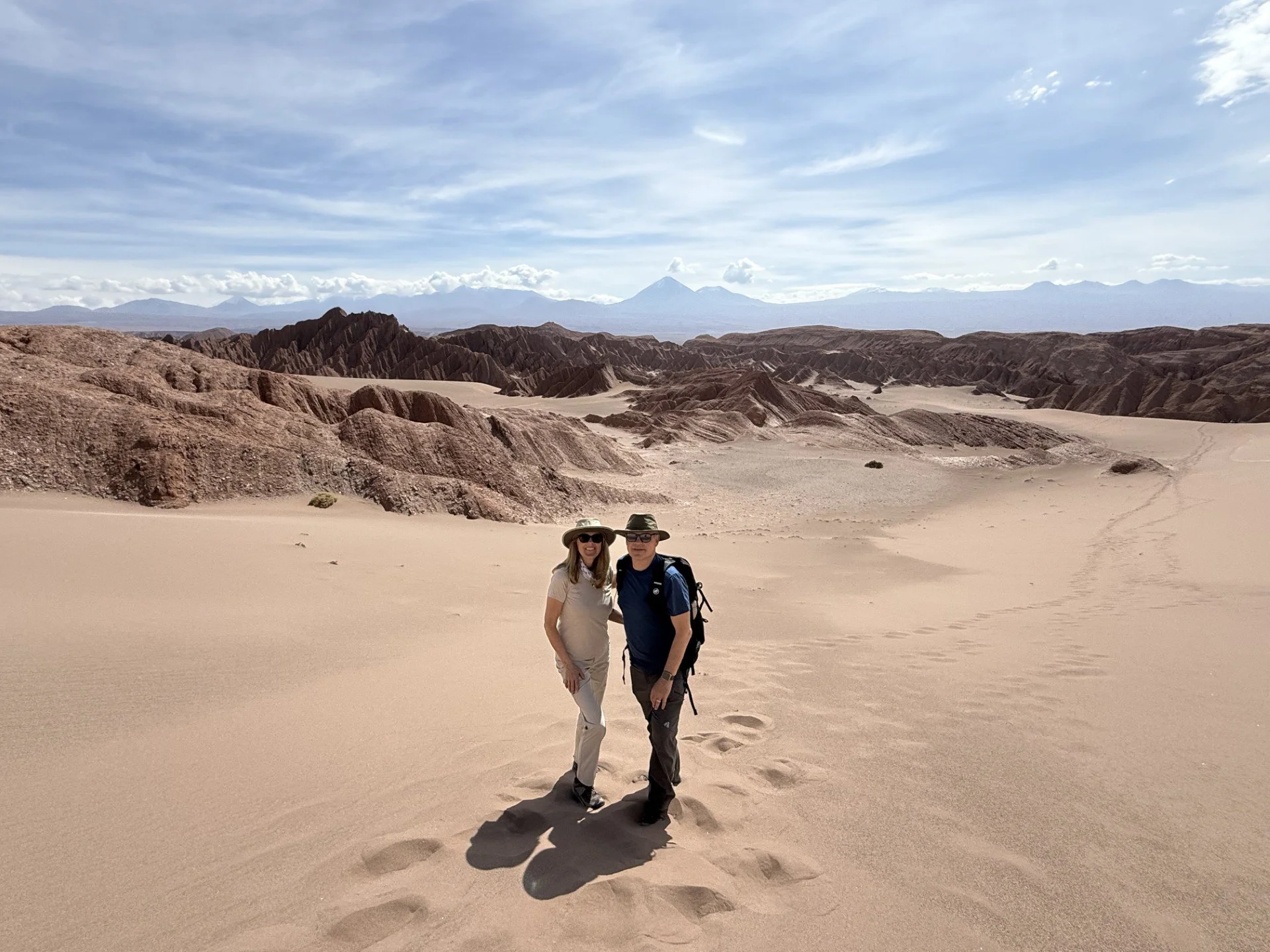
Mars Valley, Chile
Some birthdays call for cake. Sally and Tristan called John Spence.
With six continents and many passport stamps already behind them, the two knew their joint 60th called for something extraordinary. No gifts, just an adventure worth remembering.
What took shape was a month-long journey through Chile and Antarctica, from the otherworldly dunes of the Atacama Desert to the icy waters of Antarctica by kayak, through the peaks of Patagonia, and finally to the remote shores of Easter Island.
You might see two of those destinations in one trip, sometimes even three. But Easter Island is rarely part of the conversation. It's remote, not especially easy to reach, and often overlooked.
It turned out to be the piece that elevated the entire journey.
"I'll admit, I had quietly wondered whether they might have allowed too much time there," John says. "How long can you really spend looking at giant carved stone figures?"
As it turns out, quite a long time.
They were completely captivated. Not just by the landscape, but by the stories, the mystery, and the sense of isolation that makes the island feel unlike anywhere else on earth. It was the perfect ending to their adventure.
"We were both sitting back thinking that was the trip of a lifetime," Sally recalls. "Not just the way it was planned, but because of what we were doing."
Some of the most memorable journeys aren't just about ticking off iconic destinations. They're about being a little curious, a little bold, and occasionally choosing the path that doesn't quite make obvious sense. Until it does.
First Stop: The Atacama Desert
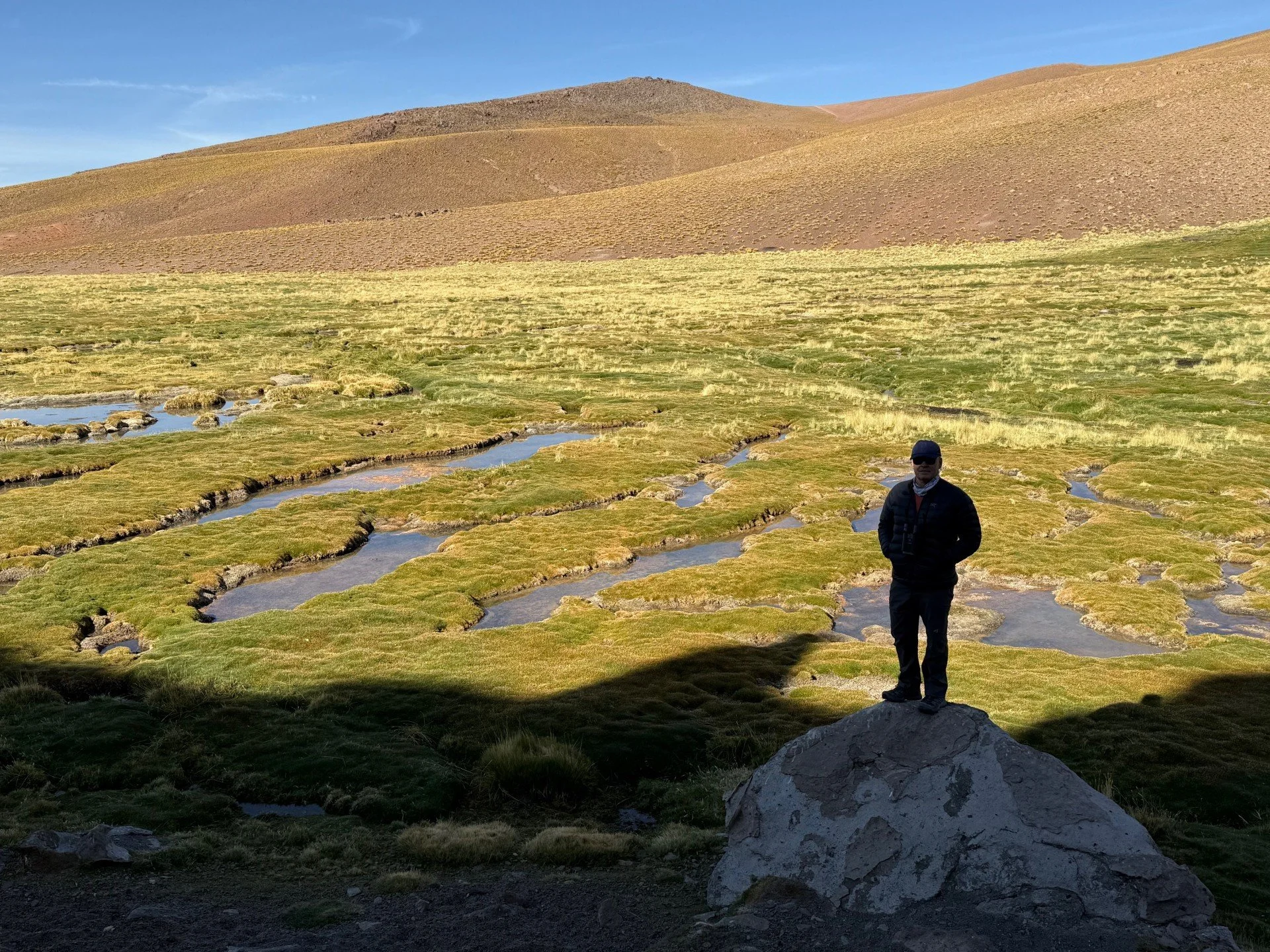
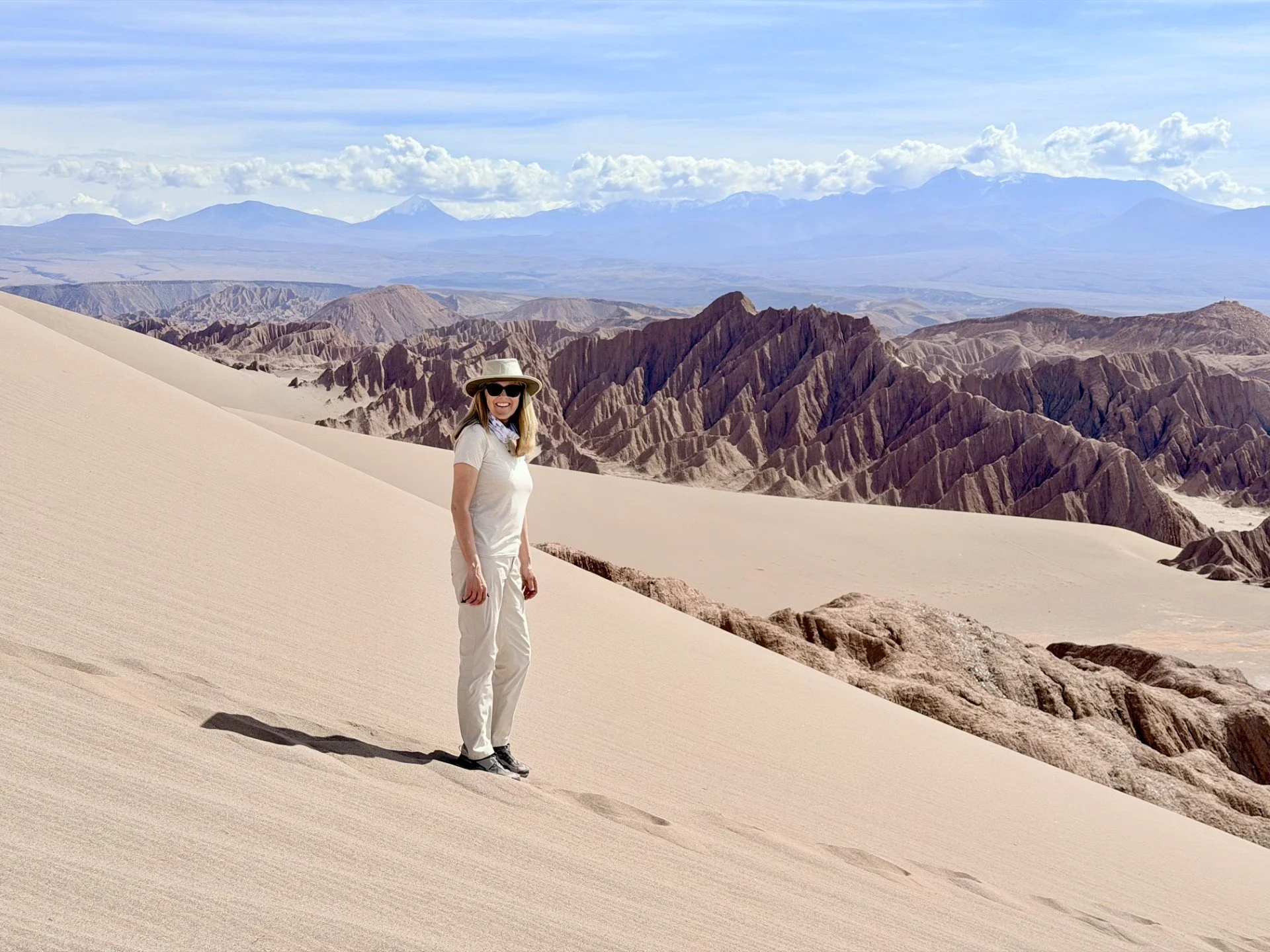
The Atacama was never the headline destination, but it didn't take long to become something more than a warm-up act. Arriving in San Pedro de Atacama, a small high-altitude town at roughly 8,000 feet, the landscape announces itself immediately.
"In the Atacama, the altitude limits you at first," Sally explains.
The famous El Tatio Geysers climb even higher, to 14,170 feet, where the elevation is impossible to ignore. One of the largest geyser fields in the Southern Hemisphere and the third largest on Earth, El Tatio takes its name from Kunza, the original language of the Atacameño people, and translates to "the old man who cries."
In Cactus Valley, Sally found herself shimmying across a narrow ledge beside a waterfall with half her foot hanging off the rock. No turning back.
"I wouldn't have done it without the guide, Mathias, there. That kind of exhilarating thing I wouldn't do if my family just told me to," she laughs.
And that is exactly what a great guide does. Takes you just beyond your comfort zone and gives you a bit of an extra push that, if your partner suggested it, you would just roll your eyes and think they were trying to get rid of you.
Antarctica: Seventh continent, Twelve Days, One Polar Plunge (by Tristan)
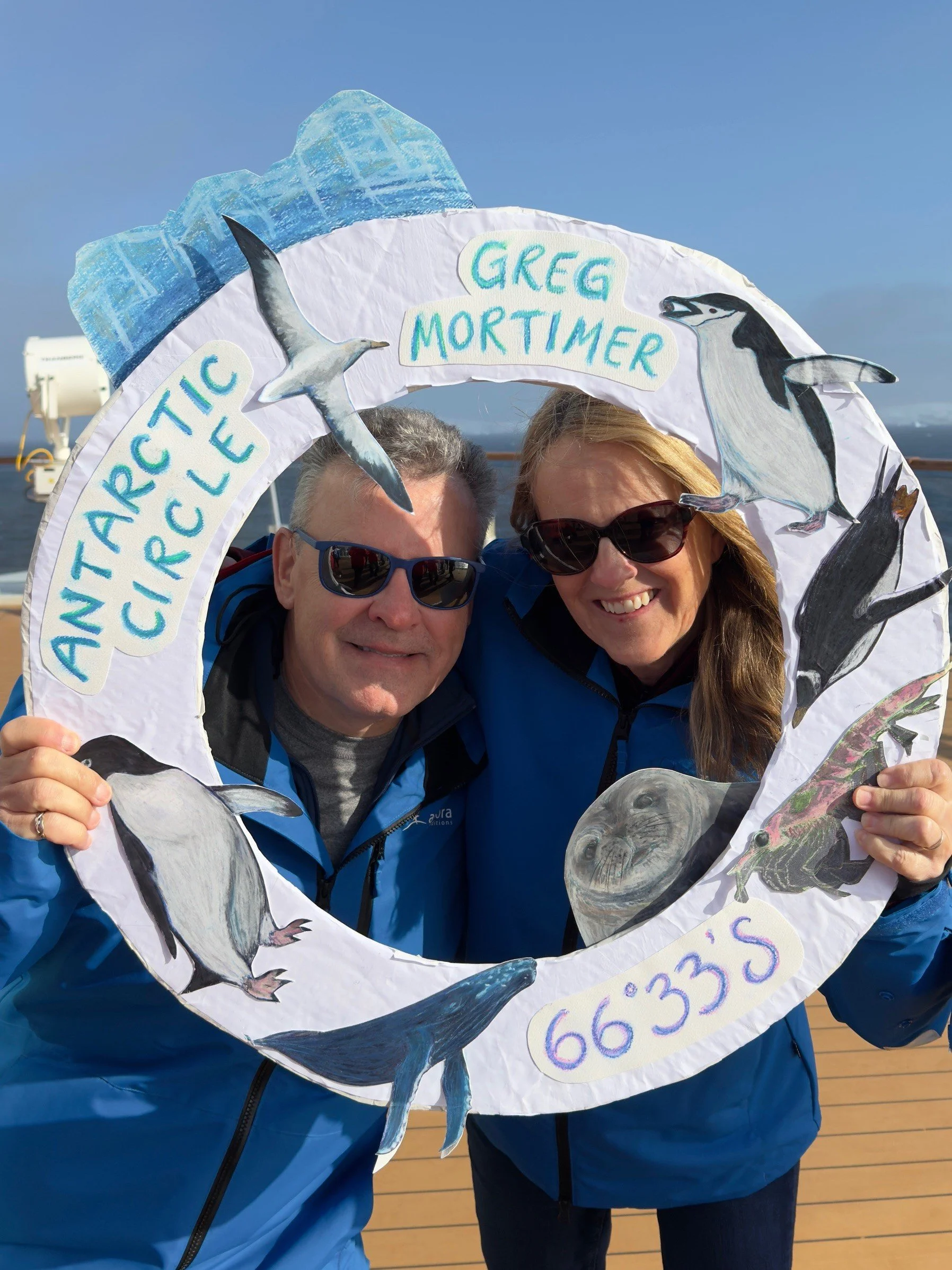
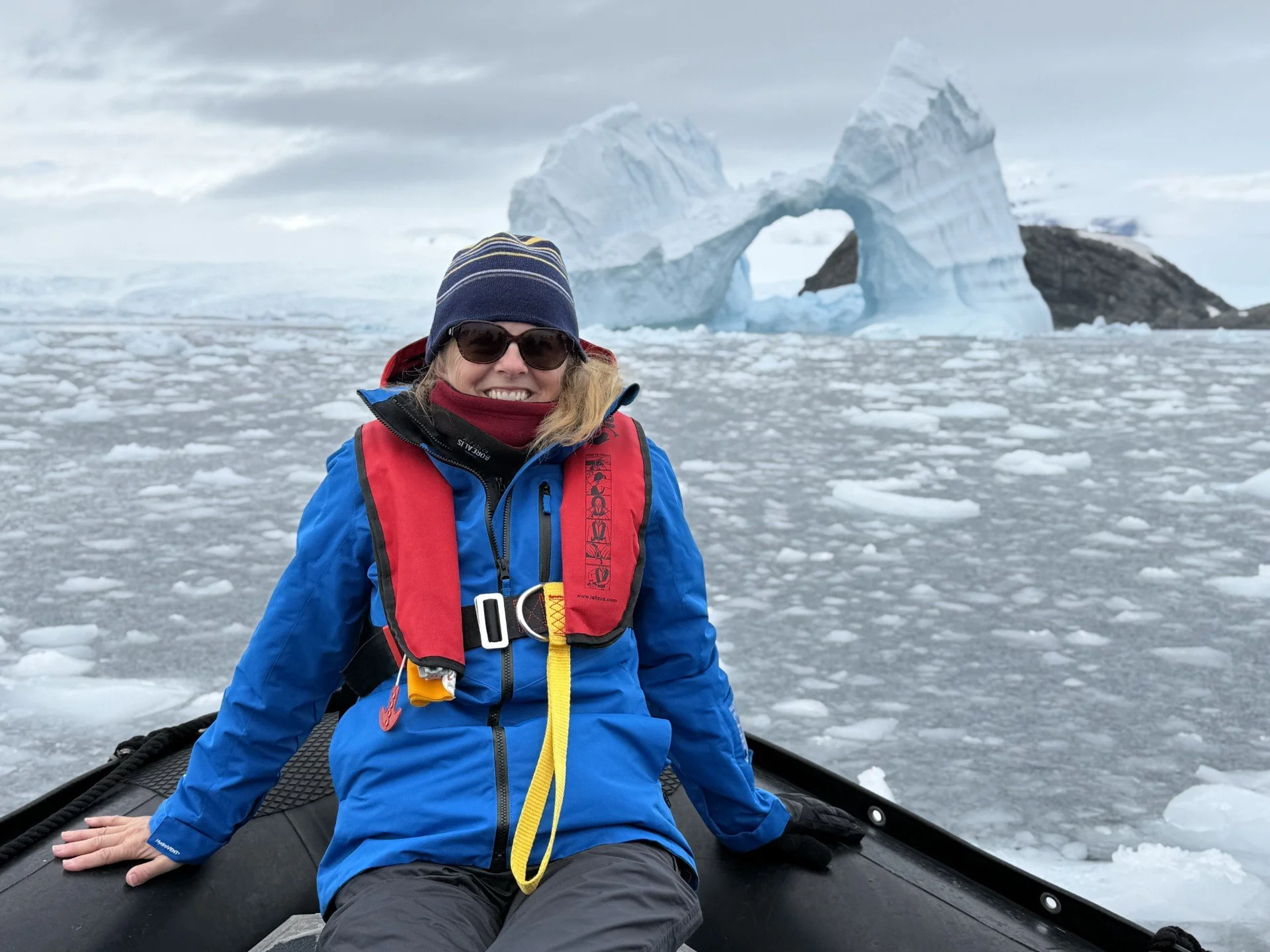
Venturing all the way to Antarctica is more than ticking a box and getting bragging rights. It gives you the chance to immerse yourself in an icy, otherworldly atmosphere. With mountains of ice and wildlife flourishing in this harsh environment, it's a place that still feels genuinely wild.
Sally and Tristan's journey to Antarctica began by flying from Punta Arenas across the Strait of Magellan to King George Island, one of the most remote places on Earth and the gateway to the Antarctic Peninsula.
Antarctica sets a limit of 100 passengers on land at any given time. With some large cruise ships carrying 200 to 500 passengers, it can be a gamble whether you'll ever make it ashore given the limit and weather conditions. This limit helps protect the ecosystem and allows for a more intimate experience for visitors.
Sally and Tristan were aboard the Greg Mortimer, a premium expedition vessel designed for small-ship voyages with just 96 total passengers. Small enough to go ashore together at any time, and to truly get to know the people you share your meals with.
Only a few meals into the voyage, Sally and Tristan made friends with a couple from Australia who they now have brunch plans with this spring. "We made a pact to one day take our expedition jackets to Australia and recreate the photo we took on the bow of the ship. Same jackets, different continent, probably in shorts. That's the kind of trip this was," Sally recalls.
The ship pushed all the way to the Antarctic Circle, crossing some rougher open water along the way. Each evening the Zodiac crew, who doubled as marine biologists, geologists, and historians, would break down everything they had seen that day. So it wasn't just a viewing adventure, but a wonderful learning experience throughout.
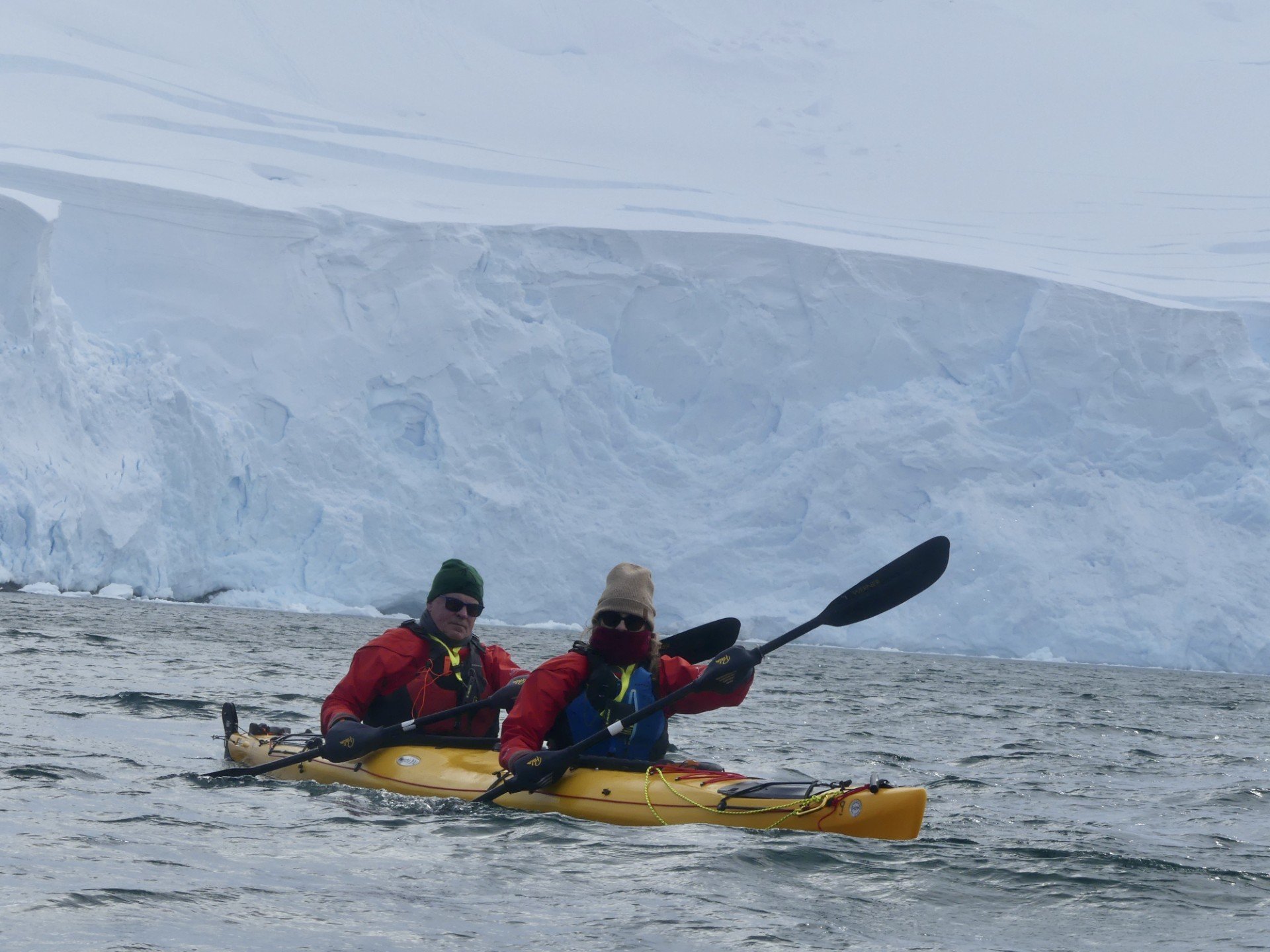
With 12 days on the ship, they fell into a routine. Each day, sometimes twice, Sally and Tristan would kayak the Antarctic waters.
And there was plenty to see: whales, leopard seals, penguins everywhere. So many wildlife encounters that in many of the videos, "you can hear me telling Tristan to go backwards when the whales came up right next to us," Sally recalls.
Antarctica's magnitude is hard to convey. The sheer ice walls, the untamed wildlife, the silence.
"You're just out there in the quiet. You can even hear the whales blowing. It was beautiful," Sally says.
Patagonia: Big Mountains, Bigger Days
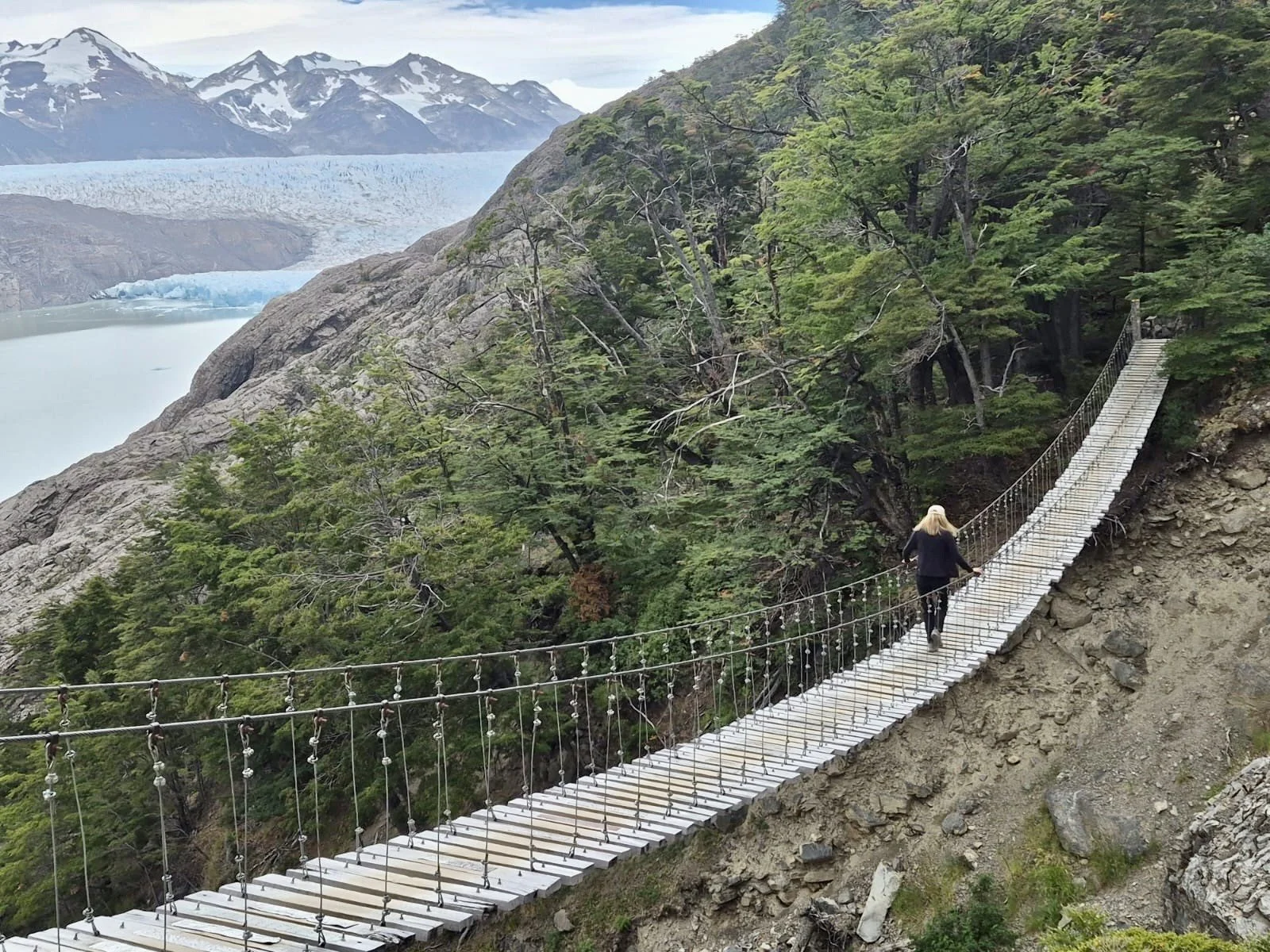
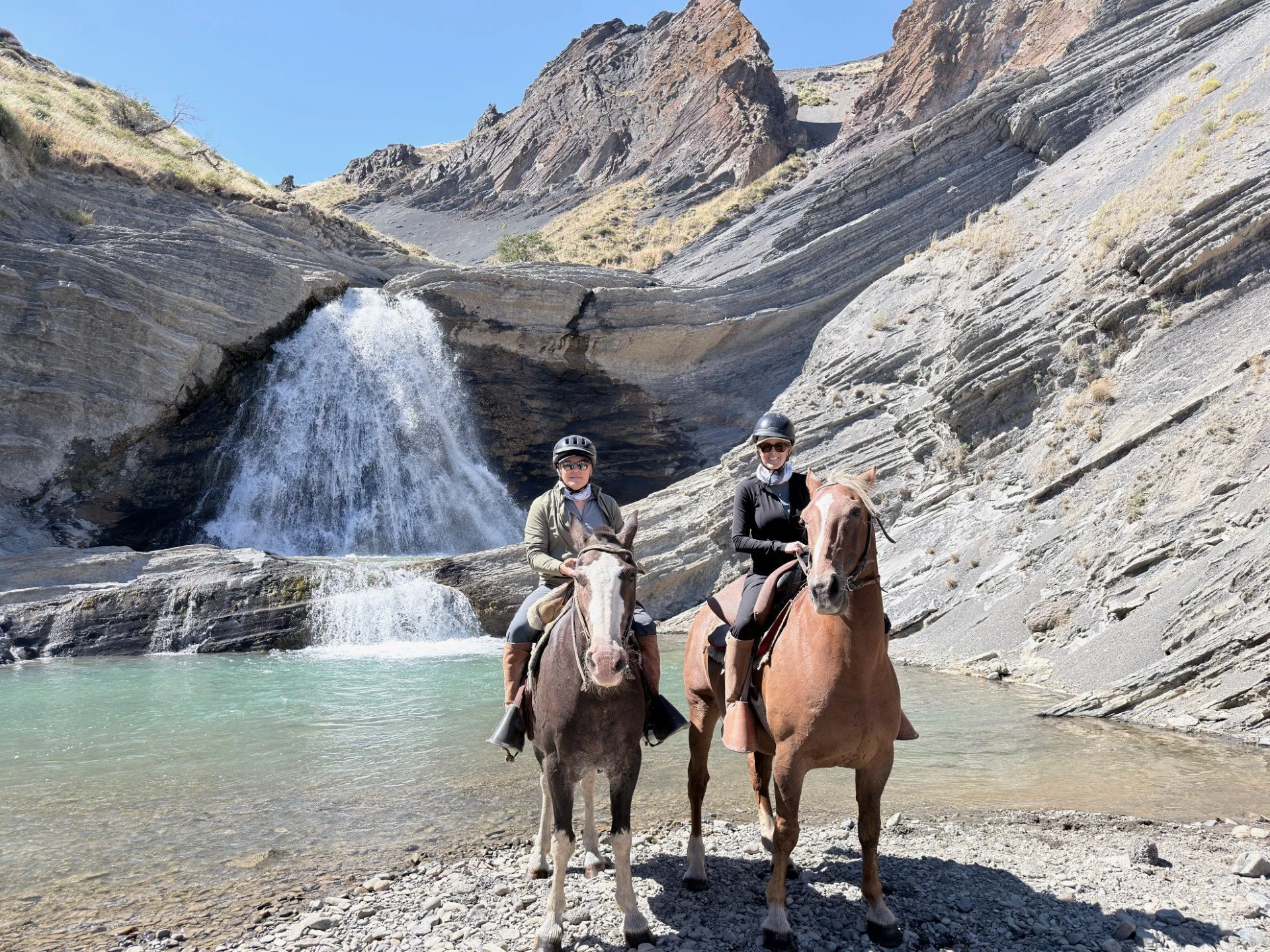
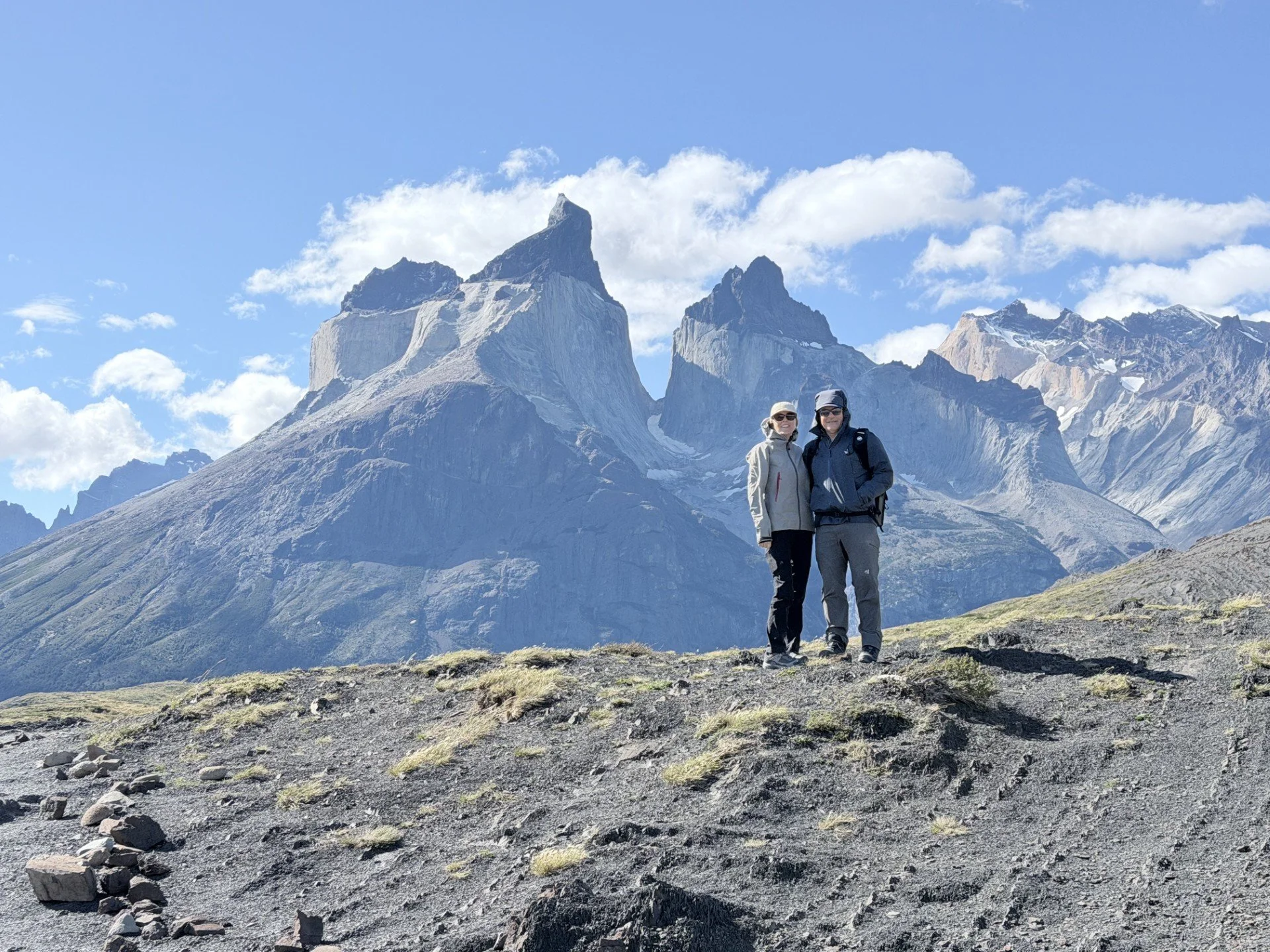
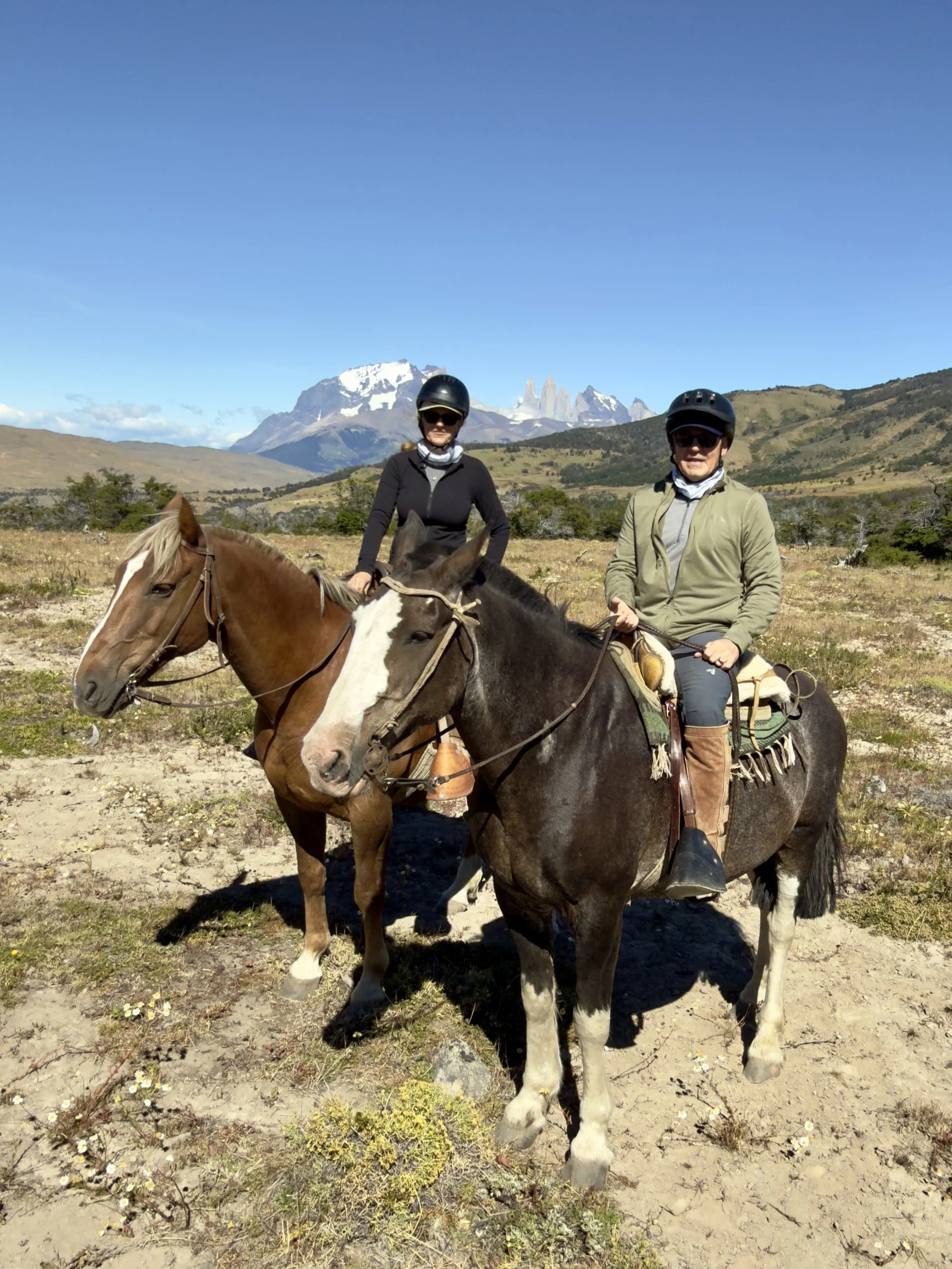
Torres del Paine delivered the trip's most physically rewarding days, with long hikes and views that made every step worth it.
Their private guide Eduardo, a former survival and tourism professor who had trained an entire generation of Patagonian guides, structured the week around their goals: the Torres themselves, the Grey Glacier bridges, and enough elevation to make every view feel earned.
A 24-kilometer hike to the base of the towers. A 23-kilometer traverse of the bridges. And as a more relaxing way to take it all in, a horseback ride through the steppe and mountain streams.
The Tierra Patagonia hotel was an architectural highlight in itself, with floor-to-ceiling windows framing the landscape.
"From a distance it just disappears into the landscape," Sally explains.
Rapa Nui / Easter Island: Mystique and Rich History
Easter Island is one of the most remote inhabited islands on Earth, 2,200 miles from mainland Chile and 2,600 miles from Tahiti. Truly out there.
What you likely know Easter Island for are the large stone statues, the Moai. And they are mysterious. Nearly 1,000 statues scattered across the island, many of them unfinished. Some are buried up to their necks, with full bodies hidden underground.
No one knows exactly why they were built, how they were moved, or what caused the civilization's collapse.
But Easter Island is more than its statues. The Rapa Nui people still live there, carrying a distinct language, traditions, and identity that set them apart from anywhere else in the Pacific.
Sally and Tristan's guide Josie, half American and half Rapa Nui, raised in the US and returned at 30 to make the island her home, brought a depth to the experience that no amount of reading could have provided.
Her grandfather had come over from the University of Wyoming in the 1950s and helped restore some of the island's most significant Moai sites, securing funding and supporting the local community through the process. His grave is on the island, and it was the first place Josie took them.
"As we walked by she said, 'by the way, that's my grandfather,'" Sally recalls.
Josie didn't just show Sally and Tristan the island. She shared it with them.
Easter Island rewards curiosity far more than it rewards ticking boxes. The longer you stay, the more you notice: the subtle differences between each Moai, the stories, the theories, the myths. The isolation has a way of slowing you down just enough to actually take it all in.
Thirty Days. A Lifetime of Memories.
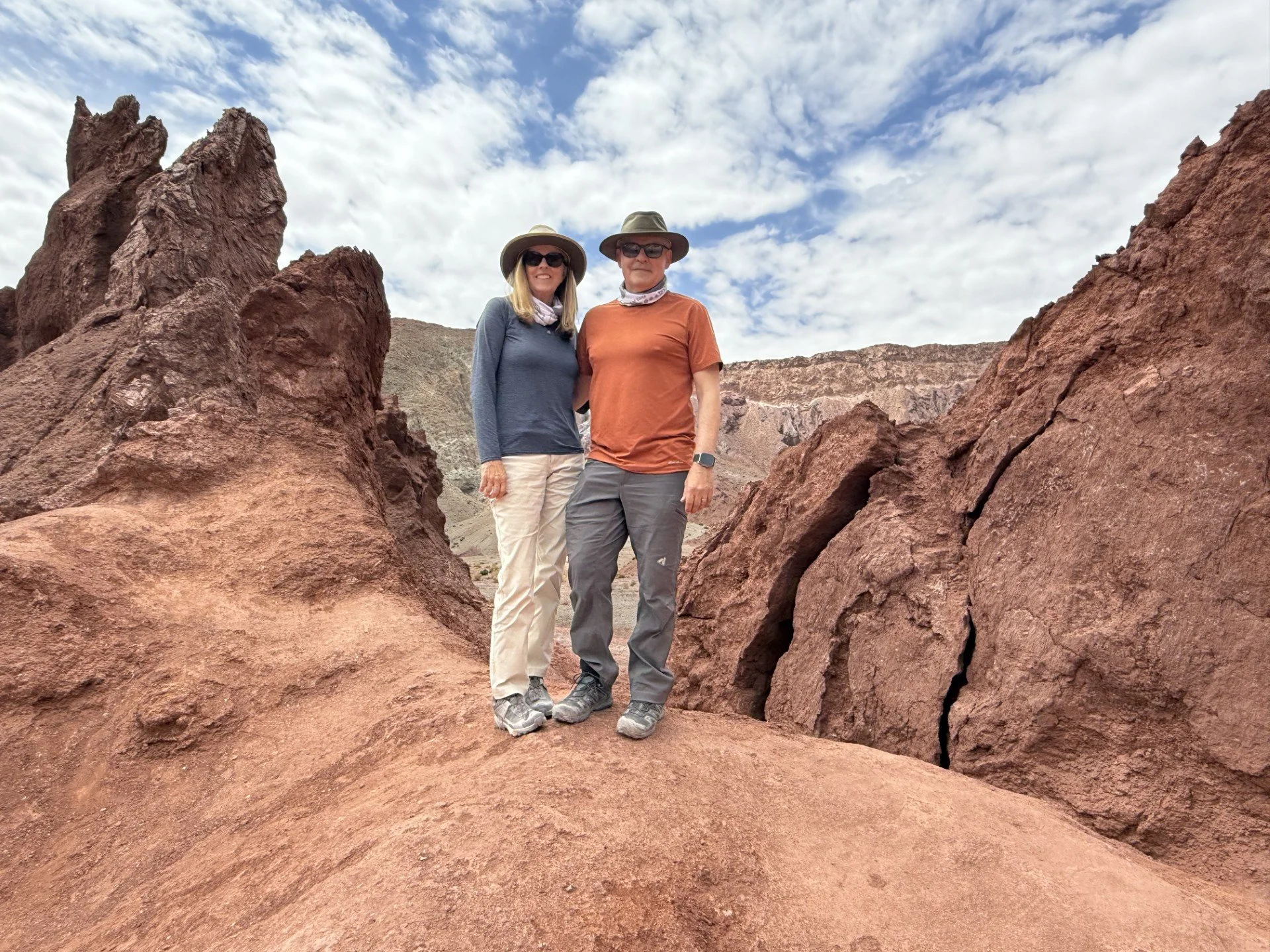
From January 17 to February 16, Sally and Tristan crossed deserts, kayaked Antarctic waters, hiked Patagonian peaks, and stood before ancient Moai on one of the most remote islands on Earth.
Thirty days. Four destinations. The Seventh continent achieved.
Patagonia impresses with scale. Antarctica overwhelms with extremes. Easter Island does something quieter, but arguably more powerful.
As with any great adventure, the value was never in how much they saw. It was in how deeply they engaged with what was there.
Some trips you remember. This one they will never forget.